Simon Galloway/Getty Images
What’s behind F1 2026’s surprising shifts in the balance of power?
Early in the 2026 Formula 1 season, domination by Mercedes was a fact of life. The team reeled off six consecutive grand prix victories, and even the two defeats suffered in the first 10 events were circumstantial thanks to Lewis Hamilton’s aggressive strategy in Barcelona and Kimi Antonelli’s broken wheel guard at Silverstone. These seemed trivial bumps in the road rather than anything severe enough to derail a runaway train of a season.
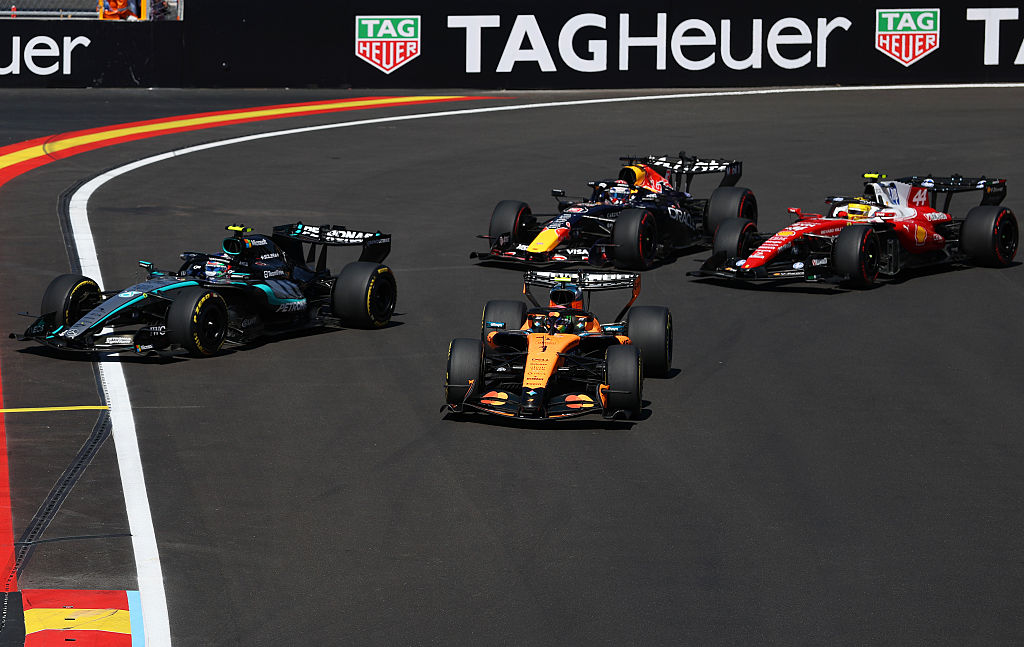
Yet while Mercedes has won three times in the seven events that followed, it was only at Monza where it had a decisive advantage. Lando Norris would have won for McLaren in Spain but for the timing of the virtual safety car and Max Verstappen chased George Russell to the line in Baku even after a power unit problem held back the Red Bull driver in qualifying. So what’s happening?
That question could be answered by the Mercedes upgrade troubles, and that’s certainly part of the explanation. But that alone sheds no light on how McLaren excelled at the Hungaroring and Zandvoort to take the first two wins of what would have been a hat-trick of victories had the VSC not intervened at the Madring. Or how Red Bull, nowhere early on, has suddenly emerged as the class of the field. This is a complex competitive picture that requires some unraveling.
The Mercedes W17 is perhaps the simplest car to explain. After the Dutch Grand Prix, team principal Toto Wolff warned that it did not have the budget headroom under the cost cap to match the development rate of McLaren and Ferrari.
“We haven’t got the money to put developments on the car,” said Wolff. “We are trying to evenly split that through the season based on our calculations of when we can bring the biggest updates and optimize the championship points. But we just can’t do what we can’t do. That’s why it is a development race. If you bring an upgrade, each of the top teams will have a couple of tenths in it, at least, and that’s what we lose. So the ride has been a bit tougher than at the beginning of the year.”
There was an element of hyperbole in what Wolff said. A major upgrade was in the pipeline that impacted all of the key aerodynamic surfaces on the car. That package was originally slated for the Singapore Grand Prix but brought forward a week when the geographical curiosity that was the Bahrain Grand Prix in Malaysia was added to the calendar. When the car ran at Sepang, it was tricky to drive with a drag increase beyond what you’d expect for the additional downforce. After both Antonelli and Russell struggled there, the question was whether it was the aerodynamic effect of the unusually rough circuit – which can play havoc with the enormously sensitive floors – that was responsible or if something was more fundamentally wrong?
In an attempt to answer that question, the packages were split in Singapore last weekend, with Russell on the old, more stable and known specification and Antonelli continuing with the new one. When Russell qualified second for the Sprint – almost 0.6s faster than his teammate – for a race he led before crashing at the end of the first lap, that seemed like more bad news. However, settings changes during the Sprint improved matters and, come GP qualifying, Antonelli was the faster of the two by almost 0.2s. He then finished on the podium, albeit with a little assistance from circumstances.
Wolff described the car as “not bad” after the race, with Russell reiterating that “the numbers say it’s performing as we expect, but obviously the lap times haven’t been that great.” The feeling is that there is greater performance in this car, but it’s difficult to extract.
“On this track, where you have a lot of slow speed, it’s still not quite there in terms of performance,” said Antonelli. “It’s just because with the old package, you know exactly where to put the car, which window, and the car works very nicely. With this new package, we see the potential, the performance that it can bring, and I do feel it in certain corners. But the window is just too small of where the car operates at this moment. It’s very sensitive to any differences that you do in the way you approach a corner or how you attack braking. So, I feel like, yes, the package is going to be faster and it can be a good step forward once we understand how to use the full potential.”
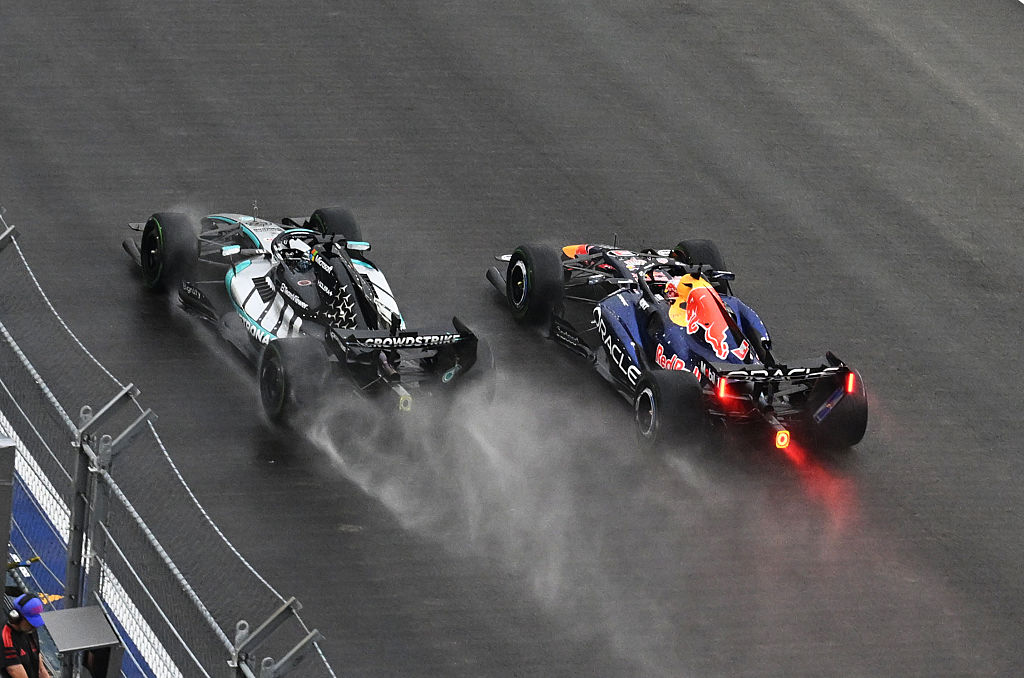
The development race hasn't favored Mercedes. Mark Sutton/Formula 1 via Getty Images
F1 visits Circuit of The Americas in Austin next, where the wider range of corner speeds over the lap will give the upgraded Mercedes W17 its toughest test yet. It’s possible that the sensitivity the drivers talk about reflects an aero map that isn’t robust enough, or some loss of control of characteristics such as aero-balance migration and all of the other subtle factors that mean simply adding downforce doesn’t predict how a car will behave. The U.S. GP could give a conclusive answer on the Mercedes development direction – and indeed upgrade strategy – for better or worse.
This was put to Wolff in Singapore in the form of a question about its upgrade strategy giving no opportunity to recalibrate from what’s learned and the potential confusion caused when clarity is needed for 2027. His response was that “you have a point.” And given the day when teams will have to sign off their pre-season package so it can be manufactured is looming on the not-too-distant horizon, that’s a big concern. Every team has the same cash to play with under the cost cap, provided they have access to it, so it’s by definition a failure by Mercedes if it is undone by how it has allocated its resources. The upcoming USA/Mexico/Brazil tripleheader of consecutive race weekends will allow that to be better judged.
However, while the Mercedes troubles are clear, what of its rivals? In the case of McLaren, its performance level across the recent tripleheader was poor to the point where it was the fourth-best car. It has known weaknesses, struggling in slow corners, carrying too much drag and running gear ratios that are on the short side, while dynamically it can be difficult in corner entries. Norris explained this well after finishing fourth in Singapore.
“It’s just on a knife-edge on every single corner,” said Norris. “You’ve just got to drive it within that exact percent [of pushing] and you have to force the car in. You can’t just let the front do the work or the rear do the work, you have to force the front, you’ve got to force the rear. You’ve got to drive it in a way that takes so much concentration and so much ability.
“It’s just full-on and mentally draining because of how hard you have to work behind the wheel. It’s just too difficult and it makes it impossible to put laps together in qualifying, which just shows how good of a job we are able to do when we were getting on pole and things like that, and how rewarding that felt. It’s just too difficult and you can’t do anything magical because you’re simply not quick enough.”
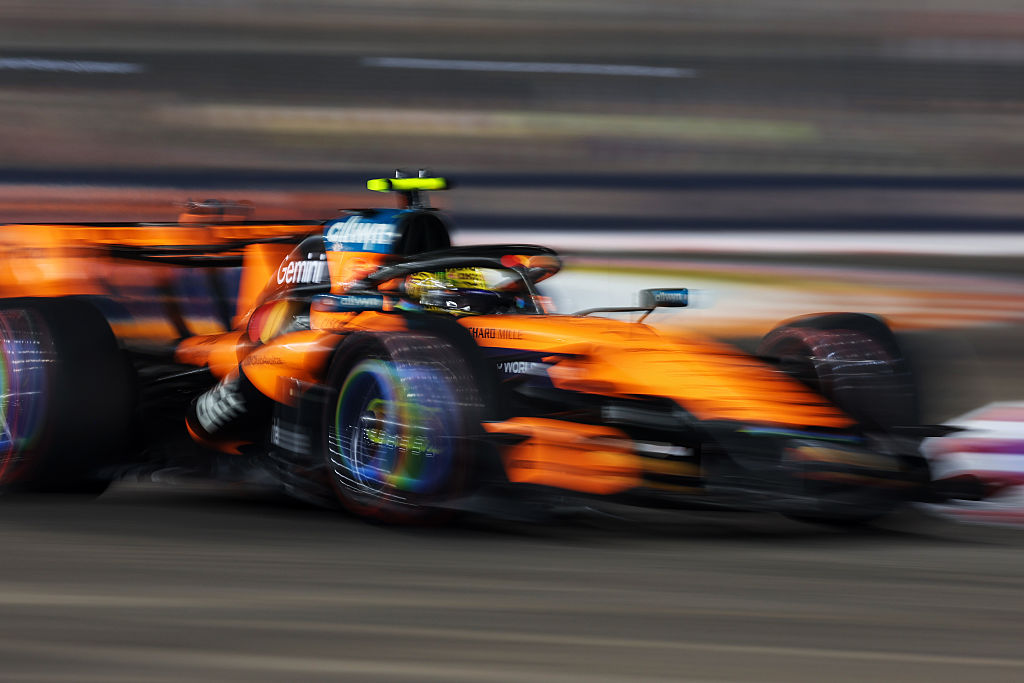
Norris and McLaren are back to winning again, but it's track-dependent as the car's knife-edge handling qualities make each weekend a guessing game. Alastair Staley/Getty Images
Team principal Andrea Stella backed up his driver in terms of the need to make the car easier to drive. But while its struggles in Malaysia could be attributed to the aerodynamic impact of the rough track surface, it’s the wider picture that's a concern. On top of that, technical problems such as Norris carrying a straight-line speed deficit in Baku and Sepang have compounded its struggles and made a car that looked on the brink of winning regularly an also-ran. And there’s no quick fix in sight, with Stella pointing to more fundamental changes being required with the ‘27 car, which is expected to have a longer wheelbase and improved gear ratios.
Red Bull’s story has been the most startling. While the RB22 became a regular podium finisher in the hands of Max Verstappen after partially recovering from its poor start, it only occasionally looked like it could produce the pace to be in the mix for a victory. That changed in Baku with the introduction of an upgrade package that transformed the look of the sidepods, but more significantly modified the floor/diffuser. Although Verstappen chased Russell to the flag, the scale of the step forward was shrouded by power unit problems in qualifying. It wasn’t until he dominated in Malaysia that Red Bull proved it is now quickest – something that was double underlined by the Singapore success. Verstappen is reveling in the connected balance that seems to give him the front end he needs to rotate the car and the back end to ensure he gets good exits. The Ford-badged Red Bull power unit has also hit its stride despite being locked out of upgrades under the ADUO system that deemed its V6 internal combustion engine the market leader.
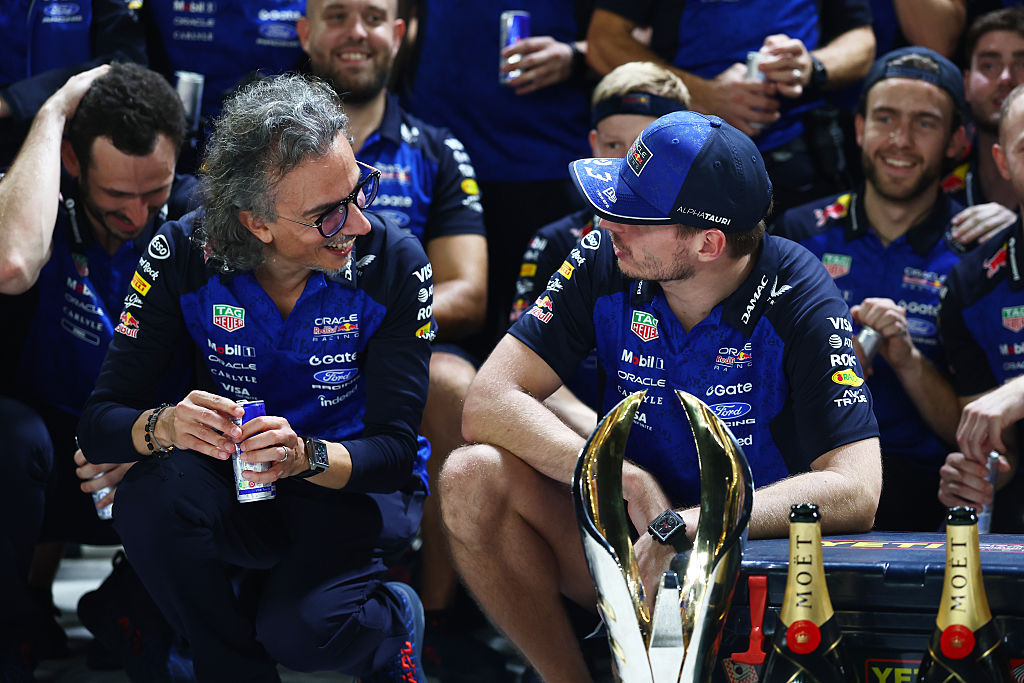
“What is a fact is that in these last three races we had the pace to win and won two out of the three,” said Red Bull team principal Laurent Mekies. “So for the first time this season, in these three races we had the ultimate pace. And it’s fair to say that the three tracks are different enough for one to think that moving to other types of tracks the car should be competitive and that’s also what we think – that the car should be competitive having shown what it has shown in the last three races.
“It’s never a given and you have seen many examples this year – the back-to-back wins from the McLaren and then [it] suffered a bit more after, you had some dominant periods from Mercedes and after that [they] suffered. So it’s a fight every race weekend to extract everything. If you do so, we think we can fight for wins. There is another element which is that we have completed our update program for this year, so this pecking order could well very rapidly change if our competitors bring upgrades.”
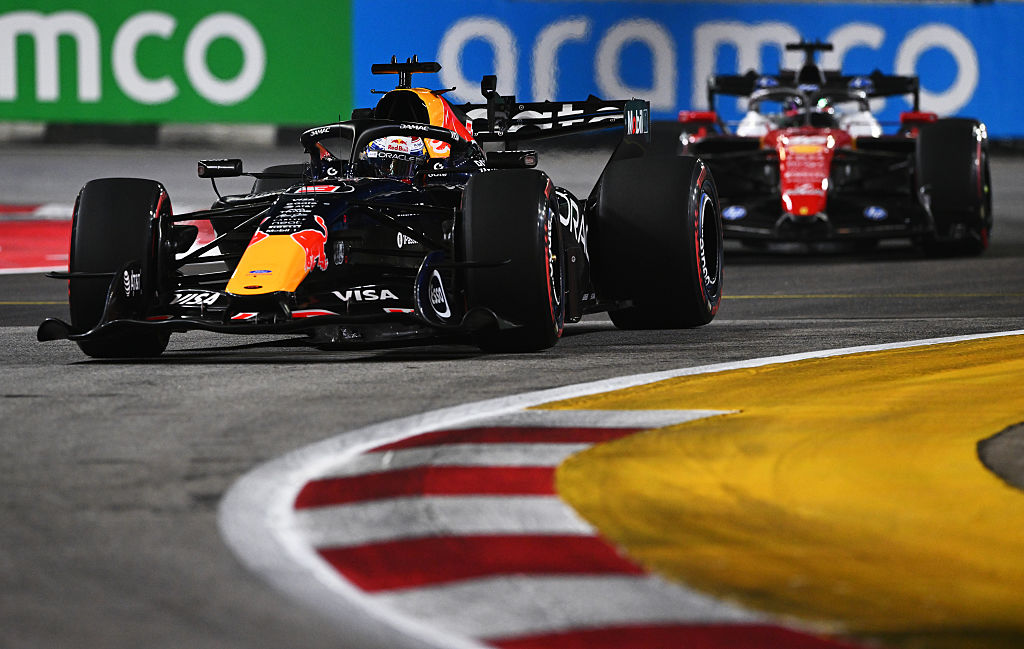
Buoyed by its power unit and development gains, Red Bull has surged, while Ferrari's early rise has stalled out. Rudy Carezzevoli/Getty Images
The missing player in this is Ferrari. It had its own mid-season spell when it thrived, having spent the early races of the season being an occasional thorn in the side of Mercedes thanks to the car’s good starts, but now seems to top out as second best. In Singapore, the car was fast enough to have claimed pole, even if Hamilton and Charles Leclerc failed to do so, but lacked Red Bull’s race pace.
The first year of a new regulations package always produces a rapid development rate and that explains some of what we are seeing. But the trajectories of these four teams are also a signpost for next year. The championship battle may effectively be over, with Antonelli and Mercedes guaranteed glory, but the competitive picture is far more complex and promising than it was earlier in the year. And that can only be positive for 2027.

Edd Straw
Edd Straw is a Formula 1 journalist and broadcaster, and regular contributor to RACER magazine. He started his career in motorsport journalism at Autosport in 2002, reporting on a wide range of international motorsport before covering grand prix racing from 2008, as well as putting in stints as editor and editor-in-chief before moving on at the end of 2019. A familiar face both in the F1 paddock, and watching the cars trackside, his analytical approach has become his trademark, having had the privilege of watching all of the great grand prix drivers and teams of the 21st century in action - as well has having a keen interest in the history of motorsport. He was also once a keen amateur racing driver whose achievements are better measured in enjoyment than silverware.
Read Edd Straw's articles
Latest News
Comments
Comments are disabled until you accept Social Networking Cookies. Update cookie preferences
If the dialog doesn't appear, ad-blockers are often the cause; try disabling yours or see our Social Features Support.